Our Research Project:
EcoBot – Autonomous Seagrass-Cutting Robot Project Goal: To develop an autonomous robot that cuts seagrass before it blooms in the Nemunas Delta and similar coastal areas. This helps reduce harmful algal blooms that negatively affect aquatic ecosystems and biodiversity. The robot enables efficient vegetation management while maintaining the ecological balance of water bodies. Moreover, this technology can be adapted to other aquatic systems suffering from vegetation overgrowth caused by human-induced nutrient pollution.Welcome to WordPress. This is your first post. Edit or delete it, then start writing!
Problem Description: Excessive seagrass and its later blooming cause oxygen depletion in water, harming local flora and fauna. Manual or mechanical removal is expensive and inefficient, thus an autonomous robot is proposed. The issue is especially urgent in regions where nutrient runoff from agriculture accelerates the eutrophication process.
Fertilizers rich in phosphorus and nitrogen enter water bodies due to intensive farming, promoting rapid aquatic plant growth. While seagrass acts as a natural filter, it can become a problem without proper management. Uncontrolled growth may lead to long-term ecological damage, including fish loss, biodiversity decline, and hypoxia. Our robot directly targets eutrophication by removing excess vegetation before it releases nutrients.
Circular Process:
- The robot cuts and collects seagrass, slowing eutrophication.
- Collected biomass is processed into eco-friendly fertilizer with reduced phosphorus.
- These fertilizers can be used in agriculture to reduce synthetic fertilizer dependency.
- Part of the fertilizer feeds specific algae species that absorb phosphorus.
- These algae can then be harvested and reused in fertilizer production, creating a sustainable nutrient loop.
Potential Plants for Phosphorus Absorption: Highly effective macroalgae include:
- Fucus vesiculosus – absorbs nutrients and provides habitat.
- Ulva lactuca – grows fast, absorbs phosphorus/nitrogen, suitable for biofuel.
Mobility System:
- The robot moves on tracks rather than floating.
- Track design allows efficient underwater travel, even in strong currents.
- Stabilization systems ensure precise operation in water.
- Adaptable construction supports varying depths.
- Hydrodynamic shape improves energy efficiency.
Cutting Mechanism:
- Sharp blades or rotating cutters trim seagrass before blooming.
- Collection system prevents seagrass from decaying in water.
- Biomass can be repurposed for biofuel or compost.
- Filters prevent bycatch of fish or waste.
- Adaptive design suits various aquatic plants.
Autonomous Navigation:
- Sensors detect plant zones and optimize routing.
- GPS and sonar guide navigation and obstacle avoidance.
- AI algorithms learn from data to improve performance.
- Capable of long autonomous missions, transmitting live data.
- Integrated analytics provide insights into aquatic ecosystems and plant trends.
Conclusion: This autonomous robot offers an innovative solution to control seagrass growth and prevent blooms. By managing vegetation, it limits phosphorus/nitrogen inflow into seas, addressing wider ecological issues. The design is ecological, economical, and adaptable to various water systems. Future development could include smart control networks of multiple robots and enhanced environmental monitoring.
Baltic Sea Eutrophication & Robot Overview:
- The Problem: Baltic Sea suffers from eutrophication due to phosphorus and nitrogen excess, leading to oxygen-depleted zones, fish deaths, and biodiversity loss—especially in the Nemunas Delta.
- Current Solutions: Manual/mechanical removal is expensive, disruptive, and ineffective long-term.
- Our Solution: An autonomous robot that cuts seagrass before it blooms, collecting it for eco-fertilizer production, reducing pollution and improving sustainability.
- Working Principle:
- Movement via spoked wheels similar to bicycle spokes for efficient underwater travel.
- Cutting with blades before bloom; special collection prevents decomposition.
- Navigation via GPS, sonar, and AI-based learning.
- Innovations:
- Adapts to various aquatic plants.
- Operates long-term autonomously.
- Collects ecosystem data for trend prediction.
- Impact:
- Cleaner Baltic Sea = better water quality, biodiversity, tourism, and public health.
Gallery:
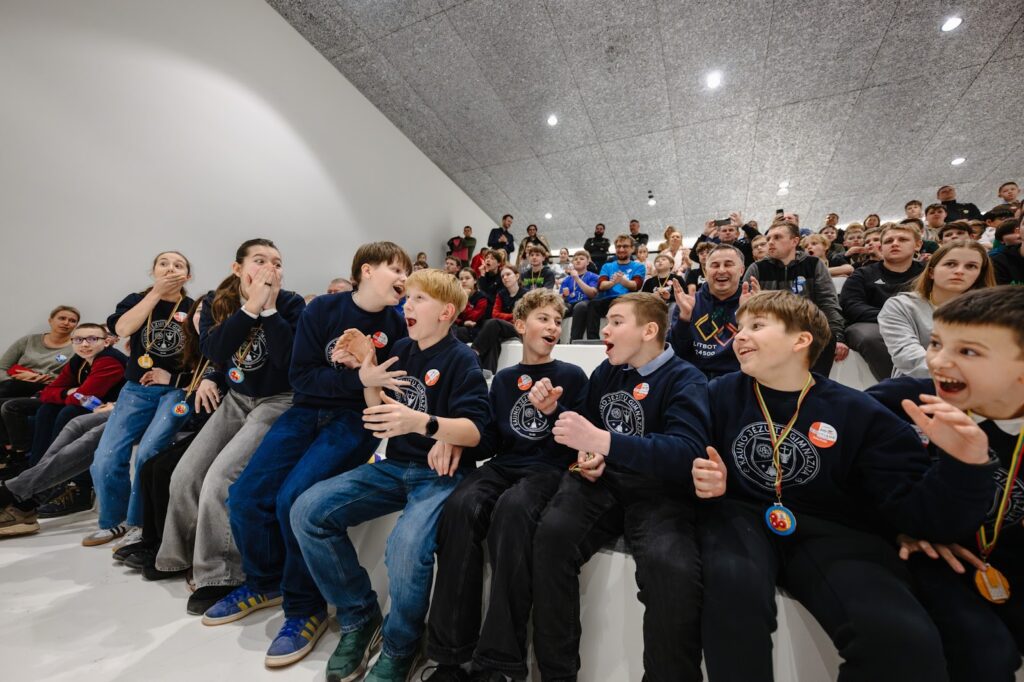
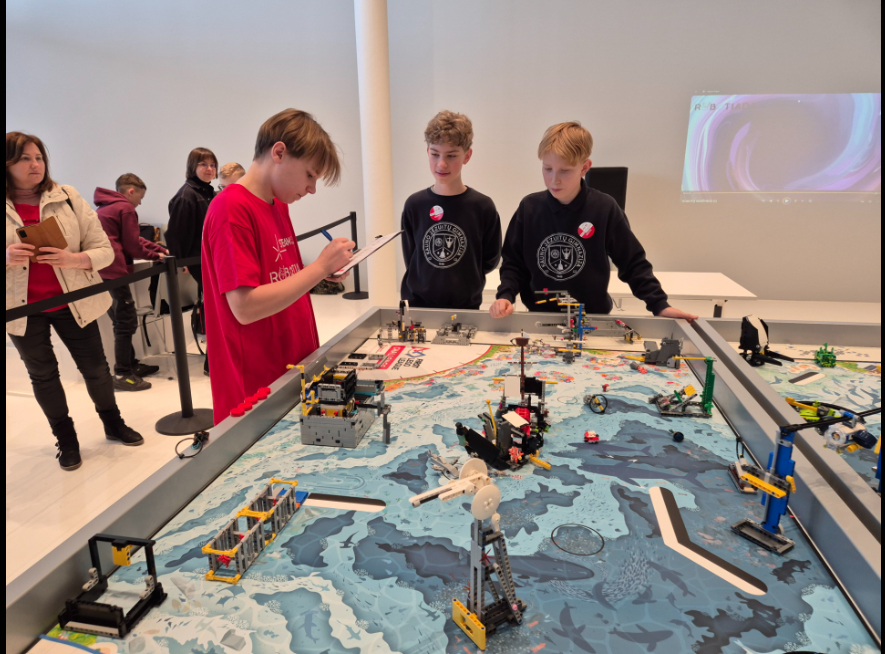
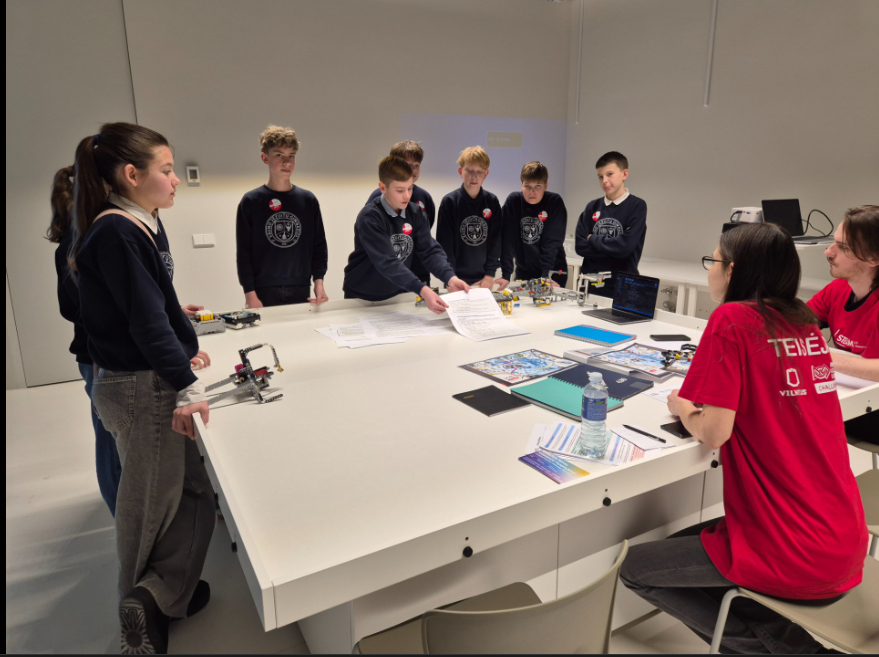
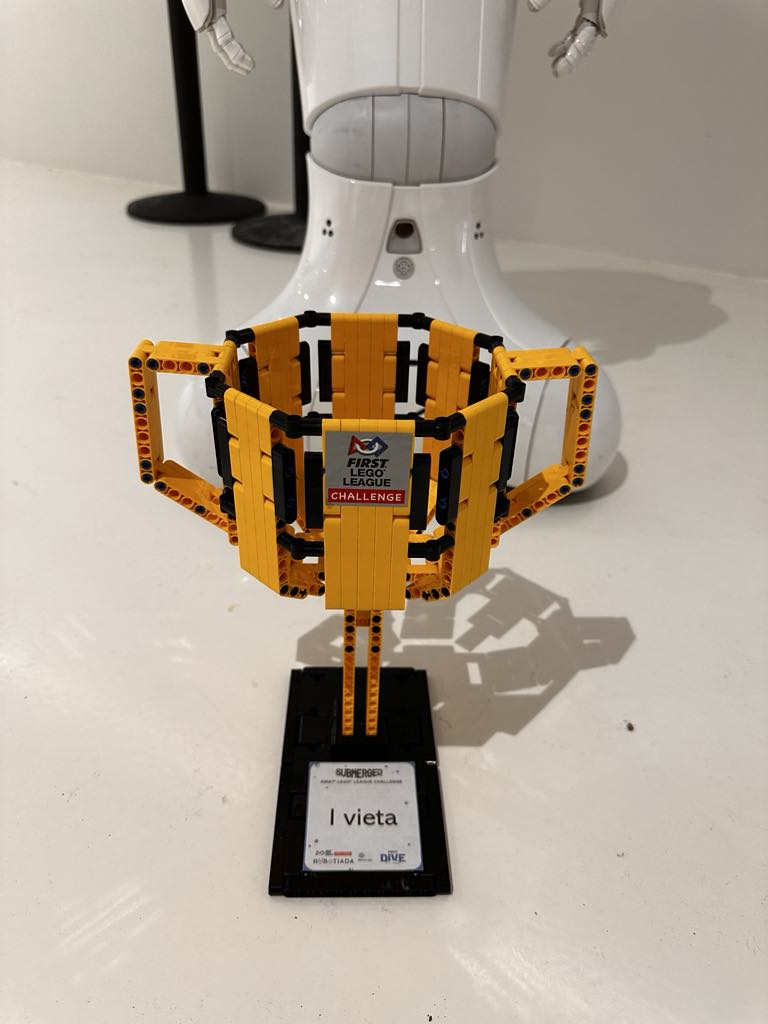
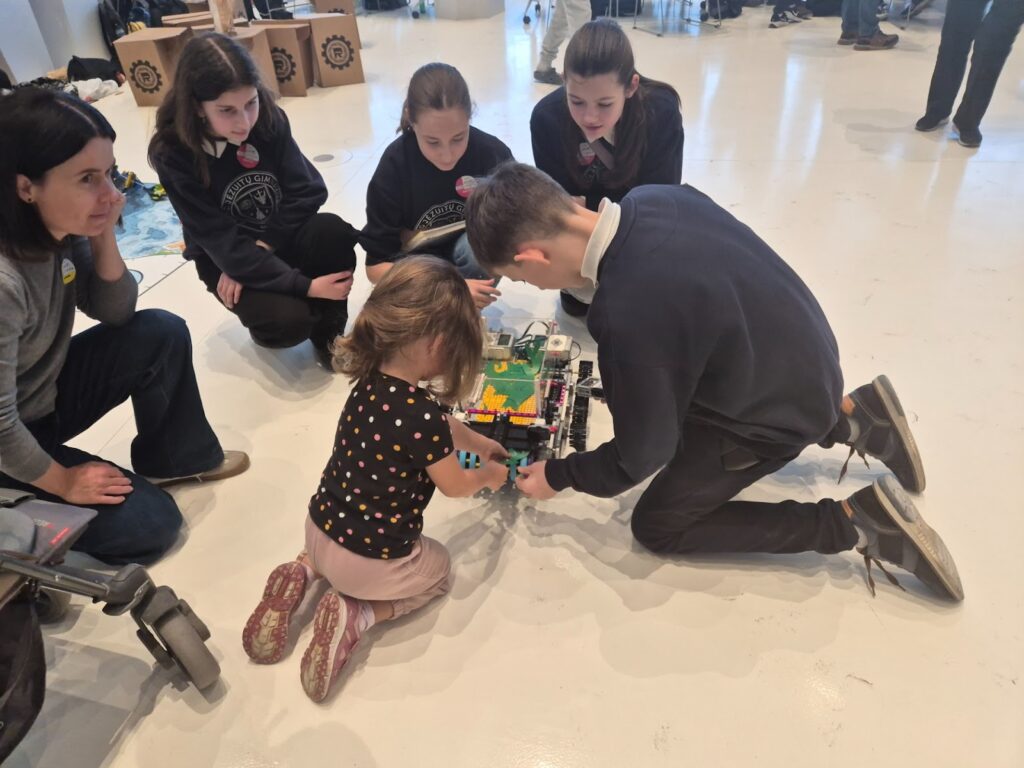
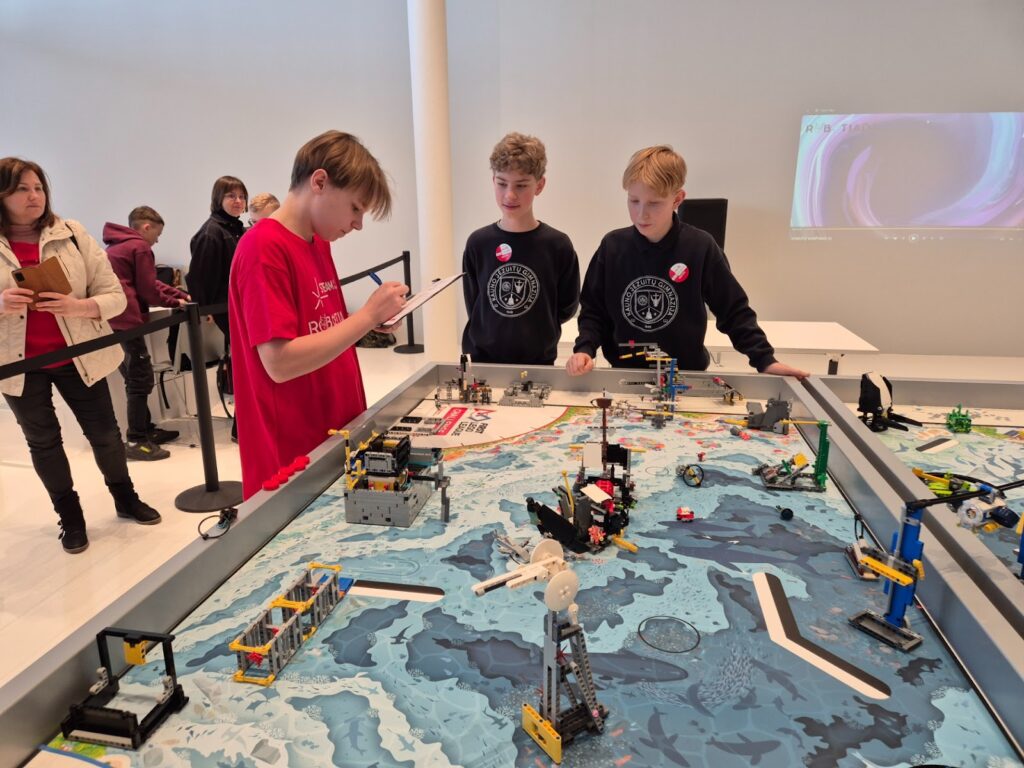
Explore our journey through photos and videos from competitions, workshops, and our EcoBot development process.